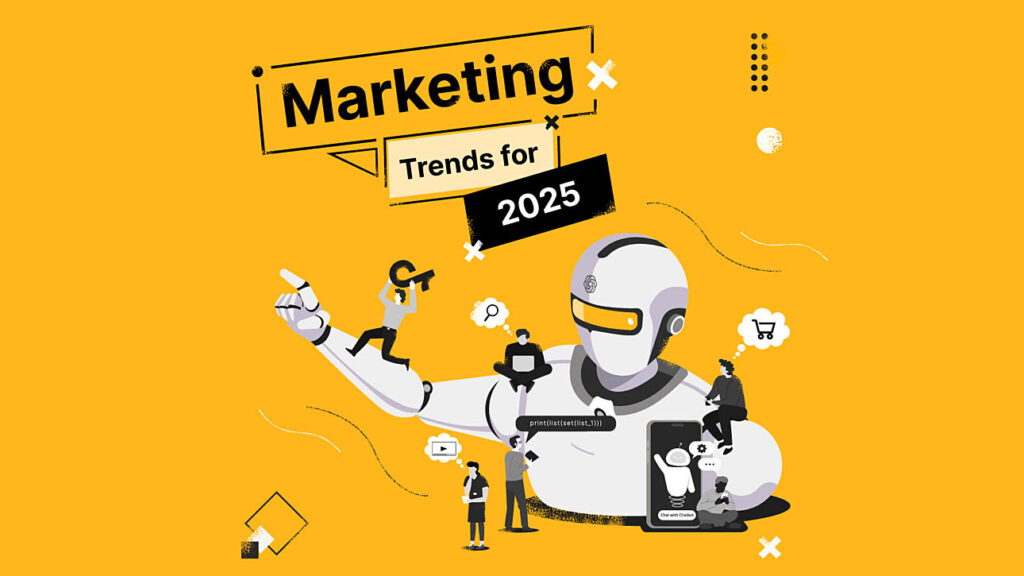
The Future of Digital Marketing: What to Expect in 2025 and Beyond
Digital marketing has completely transformed the way businesses reach and engage with their audiences. From the early days of email newsletters and banner ads to today’s AI-driven campaigns, marketing has never been more dynamic. But the digital landscape doesn’t stand still—it evolves constantly.
As we move into 2025 and beyond, digital marketing is set to become even more personalized, immersive, and technology-driven. Businesses that adapt quickly to these changes will stay ahead of the competition, while those that resist risk becoming invisible in a crowded online space.
So, what does the future hold? Let’s explore the key trends and opportunities shaping the future of digital marketing.
leo.
Artificial Intelligence Will Power Everything
Artificial Intelligence (AI) is no longer just a support tool—it’s becoming the backbone of marketing. AI helps businesses analyze data, predict customer behavior, and automate processes with incredible accuracy.
Chatbots & Virtual Assistants will handle customer queries instantly.
AI-driven ad platforms will optimize campaigns in real time.
Predictive analytics will help businesses anticipate customer needs.
Example: Netflix uses AI to recommend shows, and Amazon uses it to suggest products. This kind of personalization will soon become standard for all businesses.
Personalization Will Be Non-Negotiable
Generic ads no longer work. Consumers expect experiences tailored to their interests, behavior, and location. In the future, hyper-personalization will dominate.
Websites will display customized content for each visitor.
Emails will be personalized down to product recommendations.
Ads will be hyper-targeted to match user intent.
Example: Spotify Wrapped is a brilliant case of personalization that makes customers feel valued.
Short-Form Video Will Lead the Way
TikTok, Instagram Reels, and YouTube Shorts have shown us the power of short, engaging video content. In the future, video marketing will become even more central to digital strategies.
Brands will use storytelling in 30–60 seconds.
Live video shopping will gain popularity.
User-generated video content will drive authenticity.
Example: A brand behind-the-scenes video often gets more engagement than a polished ad because it feels real.